

Shopping for a countertop ice maker? Nugget and bullet ice can look similar in product photos, but they feel different in your glass. That matters if you’re hoping to bring home the soft ice you enjoy in your favorite soda or iced coffee.
Nugget ice has a soft, crunchy texture; bullet ice is firmer and hollow in the middle. Choose nugget if that soft texture is the reason you want an ice maker. Bullet is worth considering if you mainly need ice for everyday drinks and want a lower-cost machine.
Bullet Ice vs Nugget Ice: The Main Differences
Nugget ice and bullet ice are made differently, which explains their appearance and texture.
| Feature | Nugget ice | Bullet ice |
|---|---|---|
| How it forms | Ice flakes are compressed into small pieces | Water freezes around chilled metal fingers |
| Appearance | Small pellets or irregular pieces | Rounded cylinders with a central opening |
| Texture | Porous and relatively soft | Smoother and more solid around the hollow center |
Which Ice Should You Choose for Your Drinks?
- For soda, iced tea or iced coffee: Choose nugget ice if you enjoy small pieces that pack into a glass and hold some of the drink between their flakes.
- For everyday water and shared pitchers: Bullet ice is a practical option when you simply want to chill drinks. Check piece size before using it in a narrow-neck bottle.
- For cocktails: Follow the recipe’s ice requirements. Small ice can suit drinks served over crushed or pebble-style ice; a slow-sipping drink calling for a large cube needs a different format. Neither nugget nor bullet ice replaces a large cocktail cube in every recipe.
Which Ice Melts Faster?
Nugget ice often melts faster than bullet ice, but the result depends on piece size, ice temperature, drink temperature and surrounding conditions. There is no fixed melting time that applies to every batch.
Both ice types add water as they melt. If diluted iced coffee bothers you, chill the coffee before pouring it over ice. Nugget ice retaining drink liquid does not prevent dilution.
Choosing a Nugget Ice Maker vs Bullet Ice Maker
Compare individual machines for output, footprint and care. Ice type alone does not tell you which machine is quieter, uses less electricity or fits your counter.
- Check first-batch time separately from daily production and basket capacity. Our ice maker size guide explains how to choose output.
- Measure space for the cabinet, lid opening, refilling and the model’s required ventilation.
- Read the cleaning instructions. A self-cleaning cycle does not replace every manual cleaning task.
For an Antarctic Star model in each style:
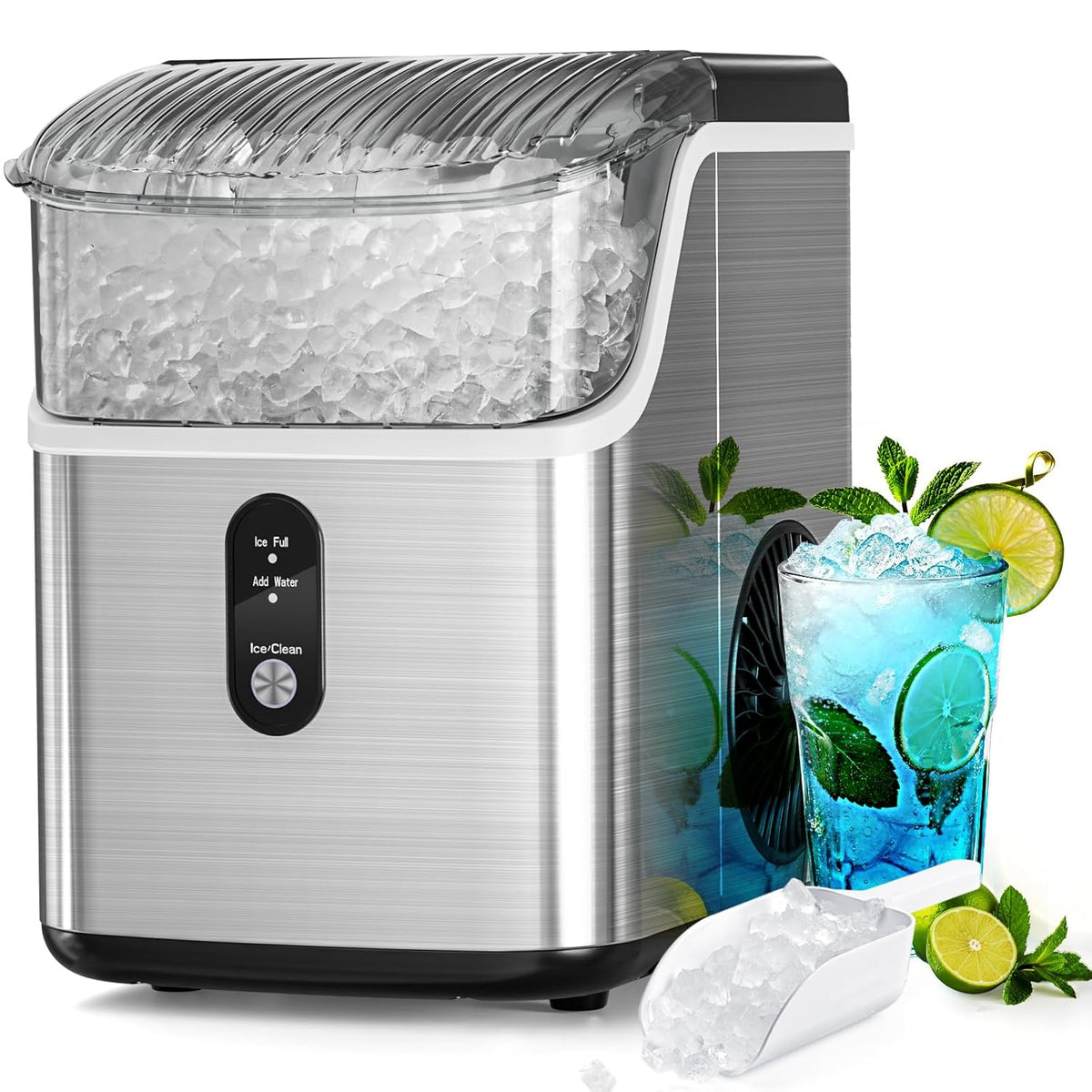
Nugget ice
Antarctic Star 34 lb Nugget Ice Maker
- Up to 34 lb per 24 hours
- 1.1 L water tank
- Self-cleaning function

Bullet ice
Antarctic Star 26 lb Bullet Ice Maker
- Up to 26 lb per day
- Two bullet ice sizes
- Carry handle
Check product pages for current pricing and availability; actual production varies with operating conditions. For nugget models, our dispenser vs scoop comparison explains the two collection styles.
Frequently Asked Questions
Are Nugget, Pellet and Pebble Ice the Same?
Pellet and pebble are common names for nugget ice. “Sonic-style ice” also commonly describes this ice style. Check photos of the actual ice because product naming can vary.
Can a Bullet Ice Maker Make Nugget Ice?
A standard bullet ice maker cannot make nugget ice by changing the ice-size setting. Selecting a smaller bullet still produces hollow bullet ice, not compressed-flake nuggets.
Are Nugget Ice Makers More Expensive?
Nugget ice makers often have a higher purchase price, although the gap varies by model. If you only need to cool drinks, a bullet machine may be enough; paying extra makes more sense when nugget texture matters to you.
Do Countertop Nugget Ice Makers Need a Water Line?
Not all do. The Antarctic Star 34 lb Nugget Ice Maker has a refillable water tank. Check the selected model’s water-supply requirements before buying.
Do Countertop Ice Makers Keep Either Ice Type Frozen?
Many countertop ice makers hold ice temporarily rather than storing it in a refrigerated freezer compartment. For longer storage, transfer ice to a freezer. Read more about whether countertop ice makers keep ice frozen.